Why lasers feel so confusing.
It's not you — it's the marketing.
"Resurfacing." "Photofacial." "IPL." "Fractional." "Non-ablative." Every med spa ad uses the words; almost none explain what they mean for your skin. Strip the buzzwords away and every laser conversation is really about three questions:
| The question | Why it matters |
|---|---|
| What does it target? | Pigment, redness, texture — different problems live at different depths. |
| How deep does it work? | Surface refreshers vs. deeper collagen remodelers. |
| What's the downtime? | A lunchtime glow vs. a week of hiding — know before you book. |
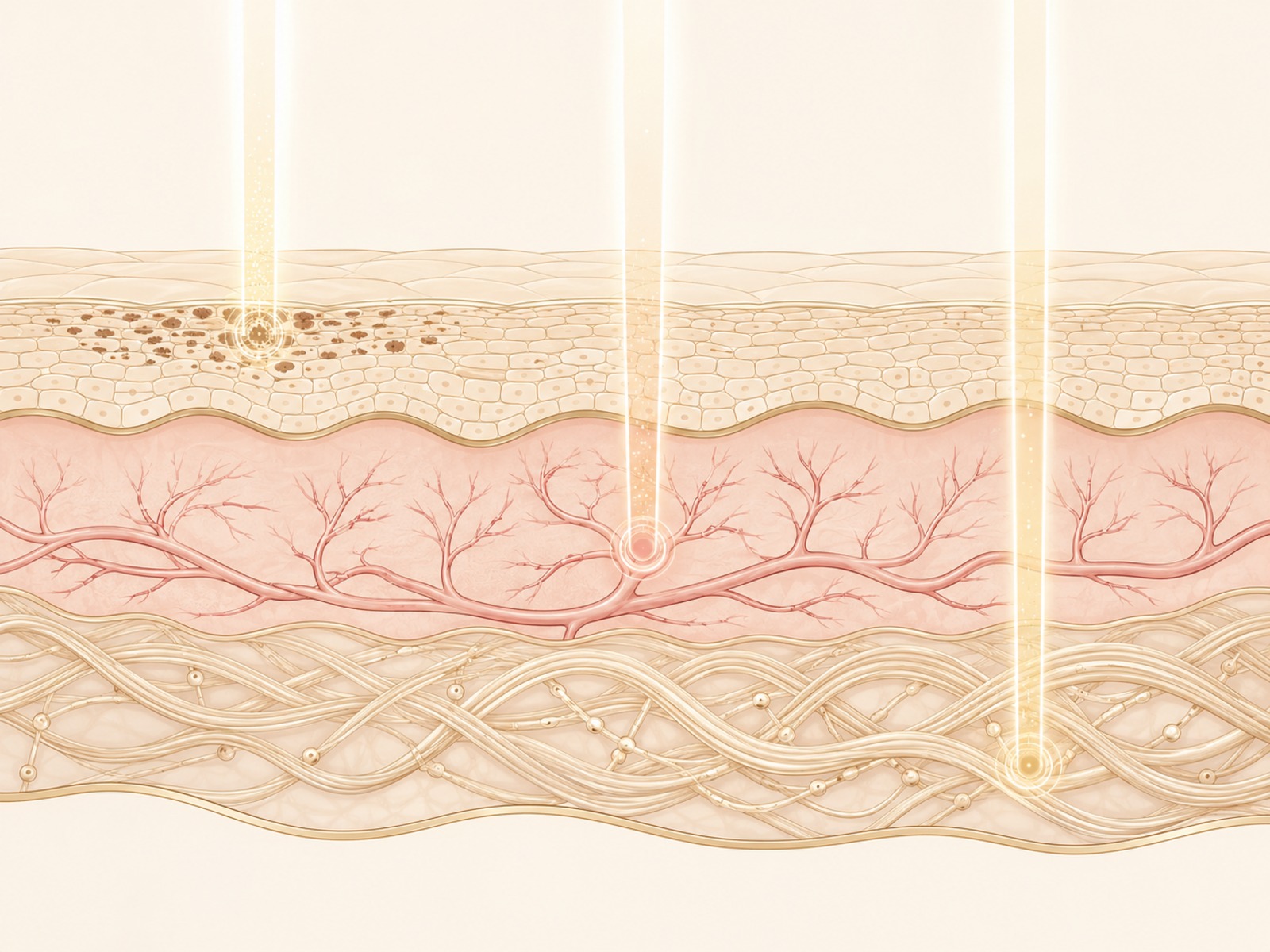
The honest rule of thumb.
The "best" laser isn't the strongest one — it's the one matched to your skin concern, your skin tone, and the downtime you can actually live with. That matching is the entire job of your provider.
What I actually use — and why.
One platform, chosen on purpose: NOUVADerm.
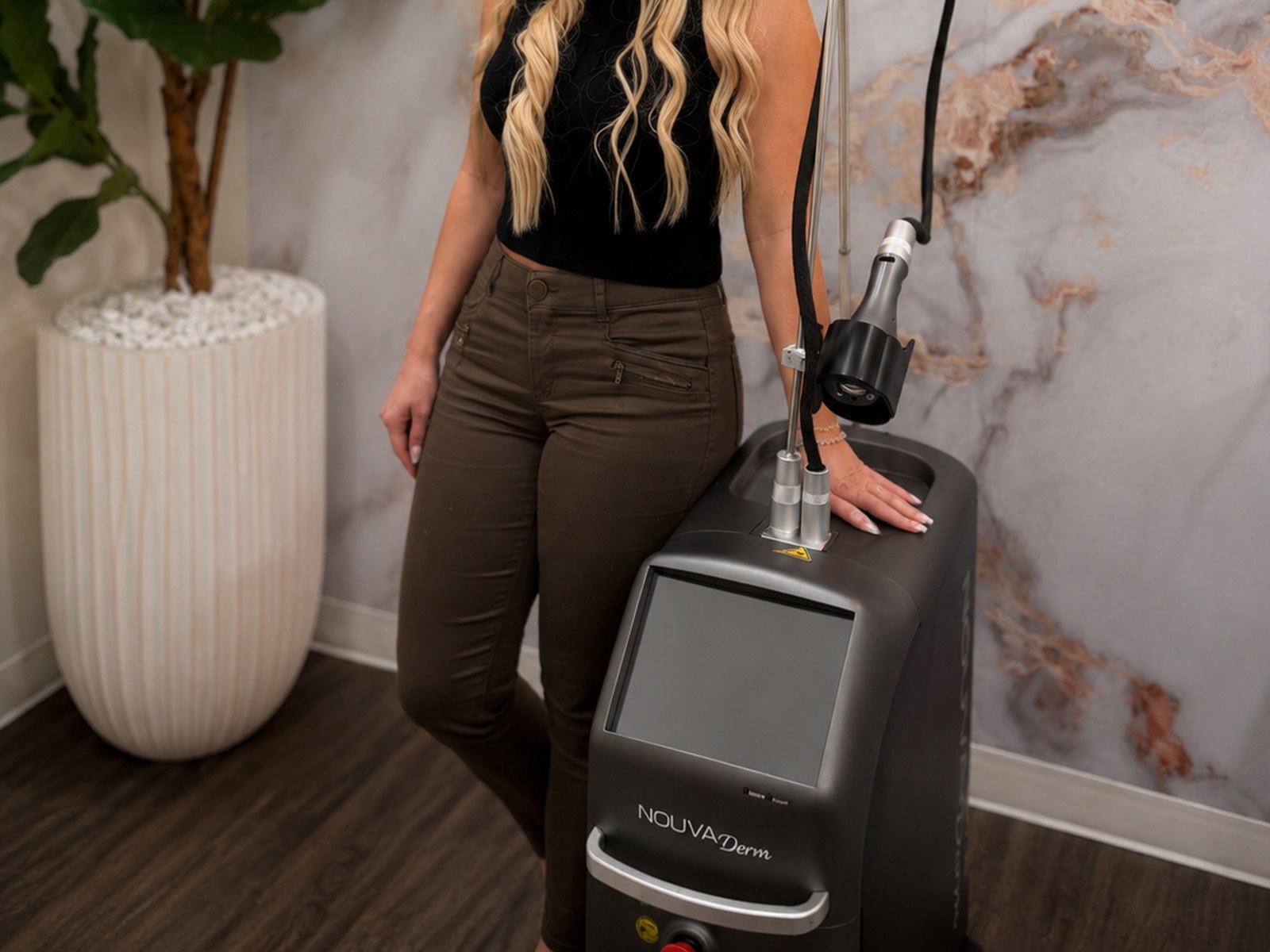
I didn't stock a laser to have a laser on the menu. I chose NOUVADerm because it solves the concerns Slidell patients actually walk in with — and because it's adjustable session to session as your skin responds. Non-invasive, and safe for all skin tones.
| Your concern | What the laser does about it |
|---|---|
| Sun spots & pigmentation | Targets the pigment directly — spots darken slightly, then flake and fade over the following weeks. |
| Redness & broken capillaries | Calms visible vessels and evens out flushed, blotchy areas. |
| Texture & dullness | Stimulates collagen so skin looks smoother and reflects light better — the "glow" people notice. |
| Fine lines & wrinkles | That same collagen response gradually softens etched-in fine lines over a series — lines that move with expression stay tox territory. |
| Fine lines & wrinkles | That same collagen response gradually softens etched-in fine lines over a series — lines that move with expression stay tox territory. |
| Hands, neck & chest | The zones that age faster than the face respond beautifully — and almost nobody treats them. |
What a series looks like.
Laser is a plan, not a one-off. Here's the realistic arc.
Conservative settings, honest expectations
We start where your skin is — not where a template says. Mild redness and warmth for a day or two afterward is totally normal.
Spots lift, tone starts evening
Treated pigment darkens, flakes, and fades. Skin often feels smoother before it visibly changes in the mirror.
Each session builds on the last
Spaced 4–8 weeks apart, with settings adjusted as your skin responds. This is where the compounding payoff happens.
Protect the investment
SPF becomes non-negotiable, and a periodic maintenance session keeps the results you paid for.
Laser, microneedling, or both?
Different tools for different jobs — the honest decision map.
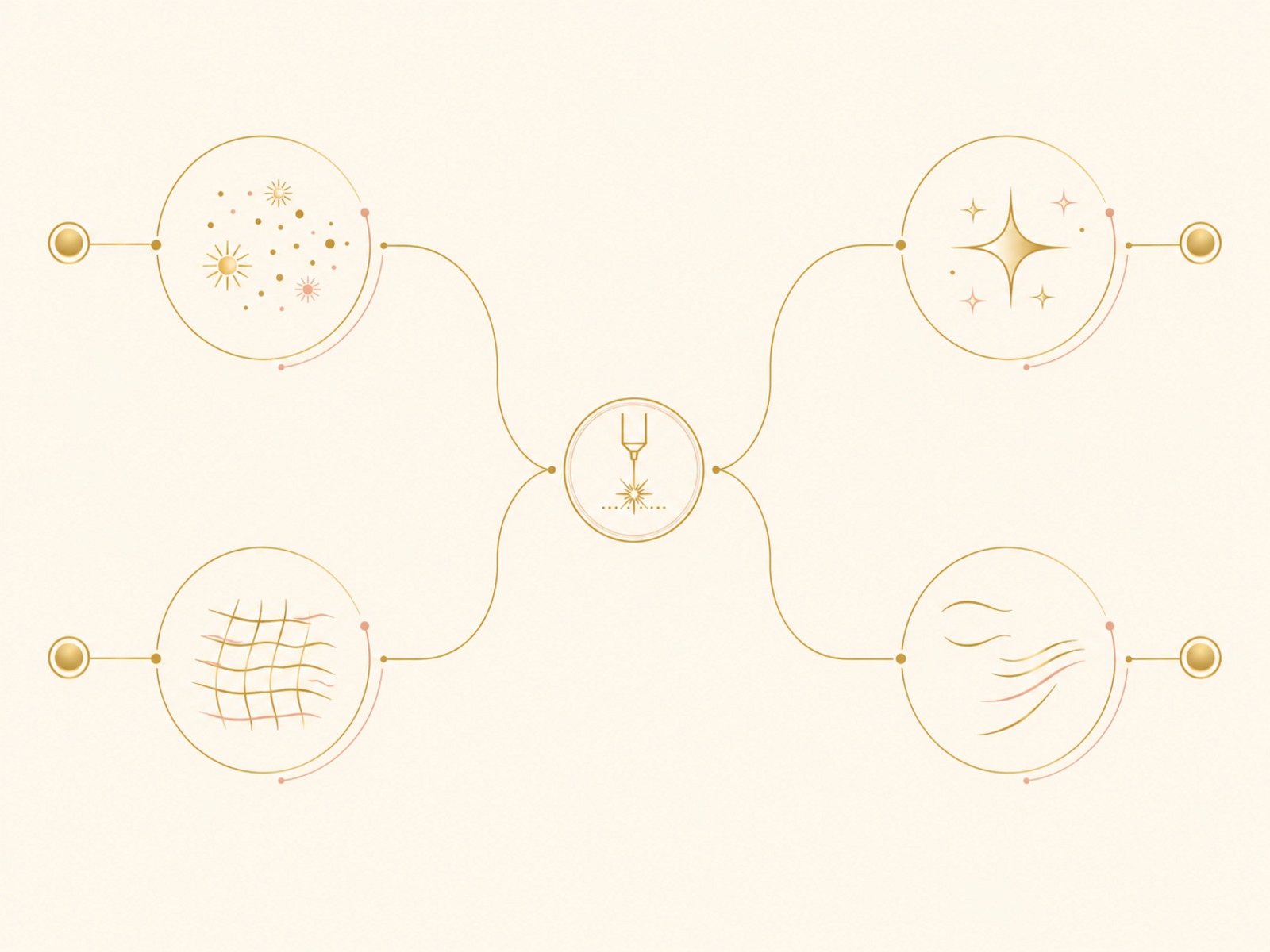
| If your main concern is… | Usually the answer is… |
|---|---|
| Sun spots, pigmentation, redness | Laser. It targets pigment and vessels directly — microneedling can't reach those. |
| Acne scars, pores, fine lines | Microneedling. Collagen induction rebuilds texture from within. |
| "My skin just looks tired" | Often both, alternated over a few months — laser for tone, microneedling for texture. |
| Lines that move with expressions | Neither — that's tox territory. Different problem, different tool. |
Prep basics — so your consult is about YOUR skin.
Arrive with clean skin, pause retinol and exfoliating acids 5–7 days before, and avoid tanning of any kind for two weeks pre-session. On photosensitizing medications? Mention it at booking — we'll time things right. Full pre- and post-care comes in writing before your first session.
Want this guide with you at your consult — or saved for later?
Download the PDF →